
Thermal analysis
DSC Calorimeter
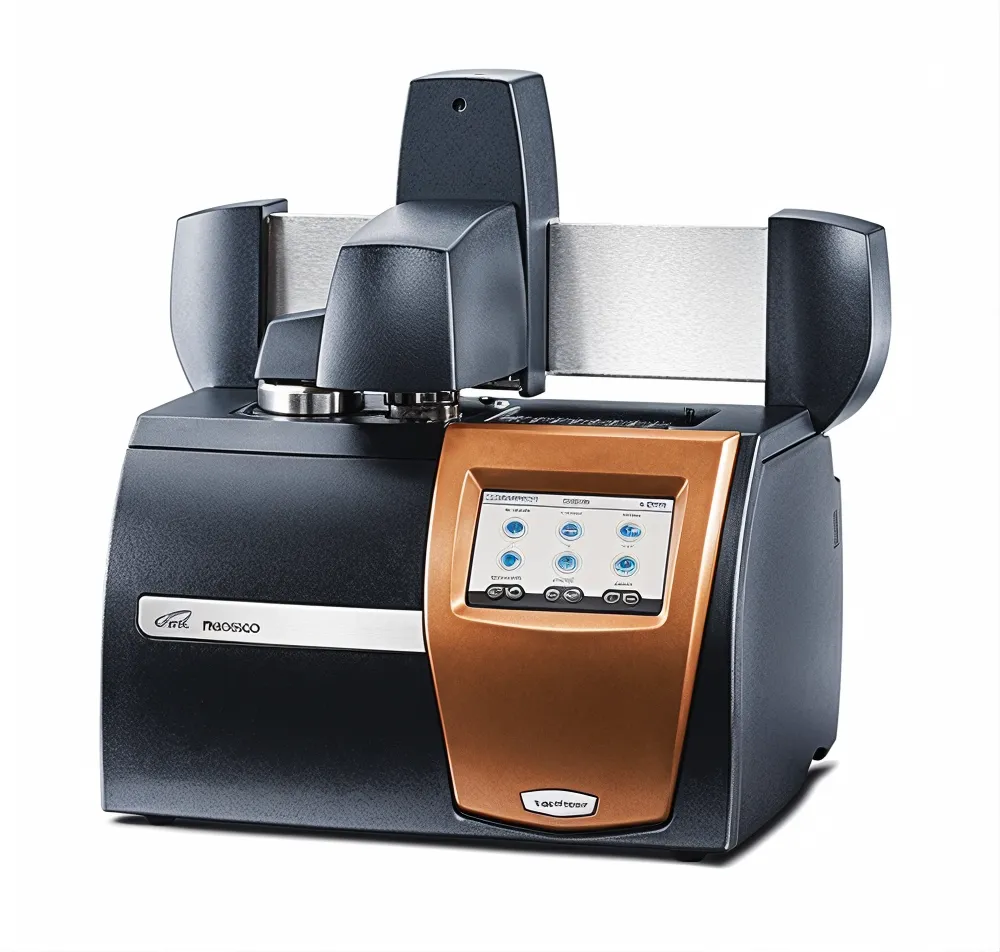
TA Instruments Discovery DSC 2500
Differential scanning calorimetry measures the heat flow into or out of a sample as it is heated, cooled or held isothermally. Glass transition, melting, crystallization, curing and oxidation each produce a characteristic signal.
Fusion Cell and T4P Tzero technology give flat, repeatable baselines; Modulated DSC separates reversing and non-reversing events, and the RCS 120 extends the range to −120 °C for low-temperature elastomer grades.
Key specifications
−120 to 725°C
Temperature range
±0.025°C
Temperature accuracy
≤5µW
Baseline flatness, −50 to 300 °C
54
Autosampler positions
- Temperature precision
- ±0.005 °C
- Enthalpy precision
- ±0.04 %
- Heat-flow technology
- Fusion Cell, T4P Tzero
- Modulation
- MDSC, standard
Performance data from TA Instruments Discovery DSC specifications.
Typical applications
- Glass transition temperature
- Melting point
- Heat of fusion
- Crystallization level
- Crystallization temperature
- Specific heat capacity
- Cure and vulcanization characteristics
- Thermal history
- Kinetics of chemical reactions
- Thermal and oxidative stability (OIT)
- Polymorphic transitions
- Purity
Example outputs
1
PEEK, first heating
The glass-transition step, the melting endotherm and the crystallinity calculated from its enthalpy, all in one heating scan. Read together, they reveal the processing and annealing history of a machined component.
2
FKM grades, overlaid
Glass-transition steps of several FKM compounds. The position of each step defines the low-temperature limit of the grade and supports material selection for cold service.